
 Home
Home 
Signs Your Stone Floors Need Professional Refinishing
Stone floors are built to last, but foot traffic, moisture, cleaning products, and everyday wear gradually take their toll, and what was once a gleaming marble entryway or polished travertine hallway can start to look tired and lackluster. Elegant Floor Services has been providing stone floor refinishing in the Washington Metropolitan Area for over 30 years, and we know that catching the warning signs early makes a difference in both the cost and outcome of restoration.
What Is Stone Floor Refinishing?
Stone floor refinishing is the process of restoring a natural stone surface to its original condition through a combination of grinding, honing, polishing, and sealing. Refinishing removes surface damage and wear, then rebuilds the protective finish that makes stone floors look and perform their best. At Elegant Floor Services, our specialty is maintenance and refinishing: we preserve and revive existing stone flooring. That focus means our technicians understand exactly how different stone types respond to the refinishing process.
Signs Your Stone Floors Need Restoration
Natural stone gives you signals before things get serious. Here are the most telling signs that it is time to call in a professional:
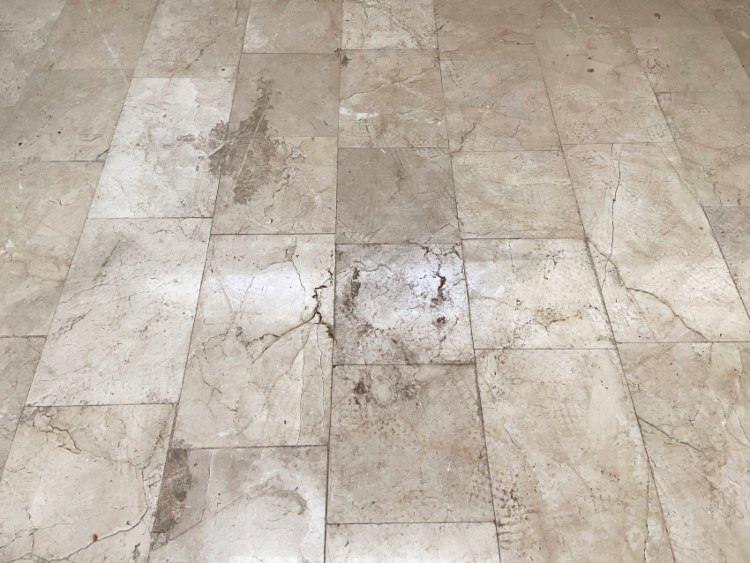
- Dullness That Will Not Polish Out – One of the clearest indicators is a floor that has lost its sheen and will not respond to routine cleaning or mopping. Only professional honing and polishing can address etching at the surface level.
- Visible Scratches and Surface Wear – Light scratches may seem cosmetic, but they compromise the stone’s protective finish and create openings where dirt and moisture can settle. High-traffic areas like hallways, kitchens, and commercial entryways tend to show this wear first.
- Stubborn Staining or Discoloration – Stains that do not respond to pH-neutral cleaners are a sign that something has penetrated below the surface, which means the sealant has broken down. Natural stone flooring is porous by nature, and once the protective layer is compromised, staining becomes much harder to address without professional intervention.
- Slippery or Uneven Texture – A floor that becomes slippery when dry often means the surface finish has worn down to the point where it no longer provides adequate traction. This is both a safety concern and a sign of significant surface degradation.
- Water No Longer Beads on the Surface – Pour a small amount of water on your stone floor and watch what happens. If the water soaks in rather than beading up, the sealer has failed. Unsealed or under-sealed stone is vulnerable to moisture damage, staining, and acid etching.
Why You Should Not Ignore These Signs
Deferred maintenance on natural stone flooring tends to compound. What starts as surface scratching can eventually lead to deeper etching. A failed sealant that allows moisture to penetrate can cause discoloration that requires more intensive restoration work to correct. Professional stone floor restoration re-establishes the protective barrier that keeps your floors easier to clean, more resistant to future damage, and structurally sound.
How Often Should Stone Floors Be Refinished?
Refinishing timing depends on the type of stone, the amount of foot traffic, and how well it has been maintained. Here’s a general guide:
- Polished marble and travertine in residential settings with moderate traffic typically benefit from maintenance polishing every one to two years.
- High-traffic commercial stone flooring often requires attention annually or more frequently.
- Textured stone floors like slate and flagstone may need less frequent refinishing but benefit from regular professional cleaning and re-sealing.
FAQs About Stone Floor Refinishing
How do I know if my floor needs refinishing or just a deep clean?
If professional cleaning restores the appearance of your stone floor, a deep clean may be all that is needed. But if the dullness, scratching, or staining persists after thorough cleaning, the issue requires refinishing to correct.
Can all stone types be refinished?
Most natural stone flooring can be refinished. The specific process varies by stone type and condition.
Does stone flooring need to be sealed after refinishing?
Yes. Sealing is a critical final step in the refinishing process. It protects the restored surface and extends the time between professional maintenance visits.
Schedule a Stone Floor Restoration Assessment
If your stone floors are showing any of these signs, the next step is to have them evaluated. Elegant Floor Services provides professional stone floor refinishing and restoration throughout the Washington Metropolitan Area, and we offer more than three decades of hands-on experience working with marble, travertine, limestone, slate, flagstone, terrazzo, and more. Contact us today to request a free estimate.
Blog Categories
Archives
- July 2026 (2)
- June 2026 (2)
- May 2026 (5)
- March 2026 (2)
- January 2026 (1)
- October 2025 (1)
- November 2024 (5)
- July 2024 (2)
- April 2019 (6)
- April 2017 (1)
- November 2016 (1)
- October 2016 (1)
- September 2016 (1)
- August 2016 (1)
- July 2016 (1)
- June 2016 (2)
- April 2016 (1)
- March 2016 (2)
- February 2016 (1)
- January 2016 (1)
- December 2015 (2)
- November 2015 (1)
- October 2015 (1)
- September 2015 (1)
- August 2015 (1)
- July 2015 (1)
- June 2015 (13)
- May 2015 (30)

2322 Montgomery St. Silver Spring, MD 20910 Proudly Serving: Washington, DC, Maryland (MD), Virginia (VA)